
Recreational walkways play an important role in connecting people with parks, wetlands, foreshore areas and nature reserves. However, these environments often present ongoing challenges for asset owners. Moisture, vegetation, changing weather conditions and constant pedestrian traffic can all affect the long-term safety and performance of walkways.
As councils and infrastructure managers look to reduce maintenance demands while improving public safety, FRP grating is increasingly being specified for boardwalks, viewing platforms and pedestrian pathways.
Rather than relying solely on material durability, FRP grating offers design advantages that directly address some of the most common challenges faced in outdoor recreational environments.
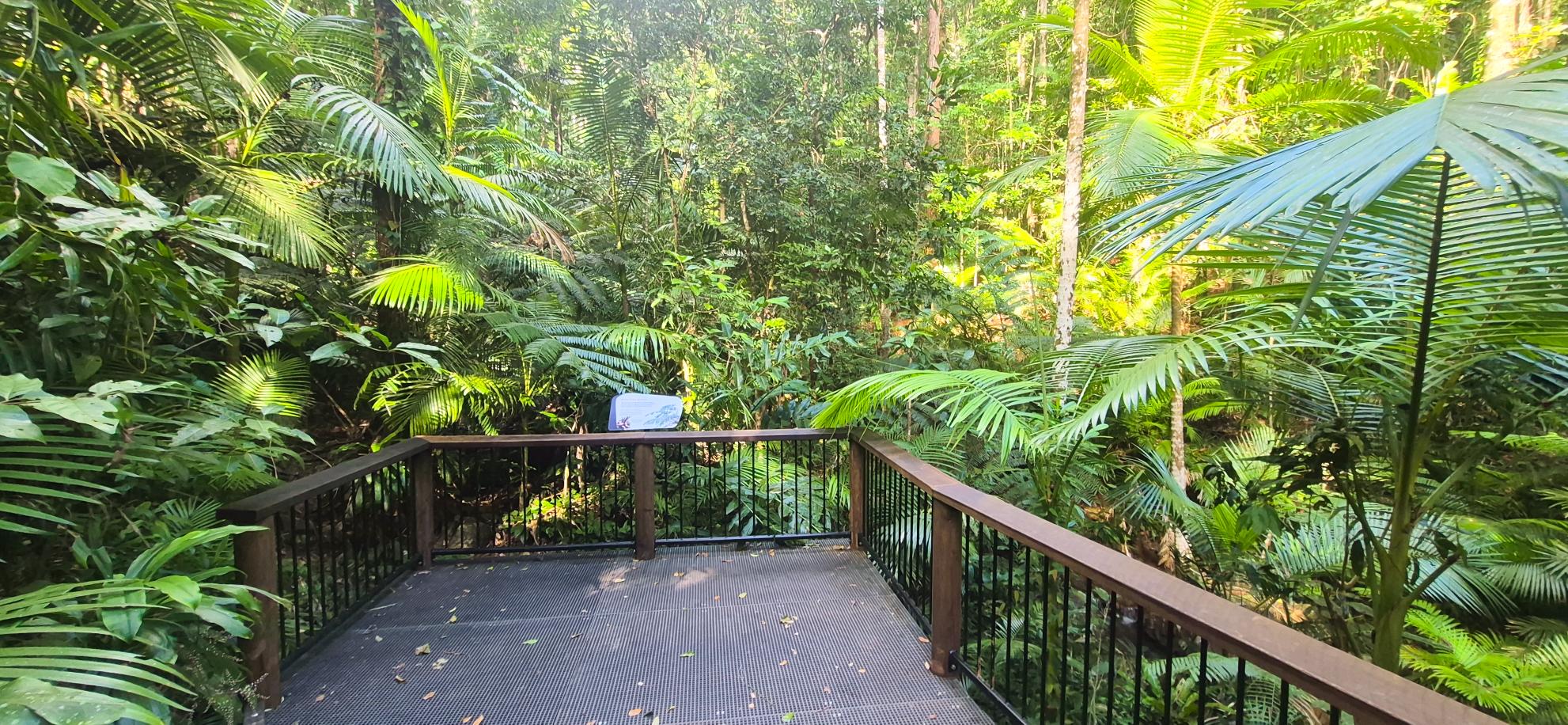
(Jindalba Boardwalk, Queensland – Photo taken in 2024)
Managing Water and Reducing Slip Hazards
One of the key advantages of FRP grating is its open-grid design.
Unlike solid walking surfaces, the apertures in FRP grating allow water to drain through the walkway rather than pooling on the surface. This helps minimise stagnant water, improve drainage and reduce the conditions that can contribute to slip hazards.
For walkways located in wetlands, coastal areas or heavily shaded environments, effective water management can play an important role in maintaining safe pedestrian access year-round.
Maintaining Traction in Challenging Outdoor Conditions
Organic build-up is a common issue across recreational infrastructure. Moss, algae, leaf litter and other decaying vegetation can quickly accumulate on walkway surfaces, particularly in areas surrounded by trees or exposed to constant moisture.
Traditional timber surfaces can become increasingly slick as organic matter builds up, creating additional maintenance requirements and potential safety risks.
FRP grating is available with integrally moulded anti-slip surfaces that help maintain grip even in wet or contaminated conditions. Combined with its open-grid design, which allows debris and moisture to clear more easily, FRP grating can support safer pedestrian movement in environments where slip resistance is a priority.
Designed for Long-Term Outdoor Performance
Recreational walkways are expected to remain operational for decades, often with limited opportunities for major maintenance interventions.
FRP grating is resistant to moisture, corrosion and weather-related deterioration, making it well suited to coastal boardwalks, environmental parks and waterfront infrastructure. Unlike timber, it will not rot, and unlike metal alternatives, it does not rust.
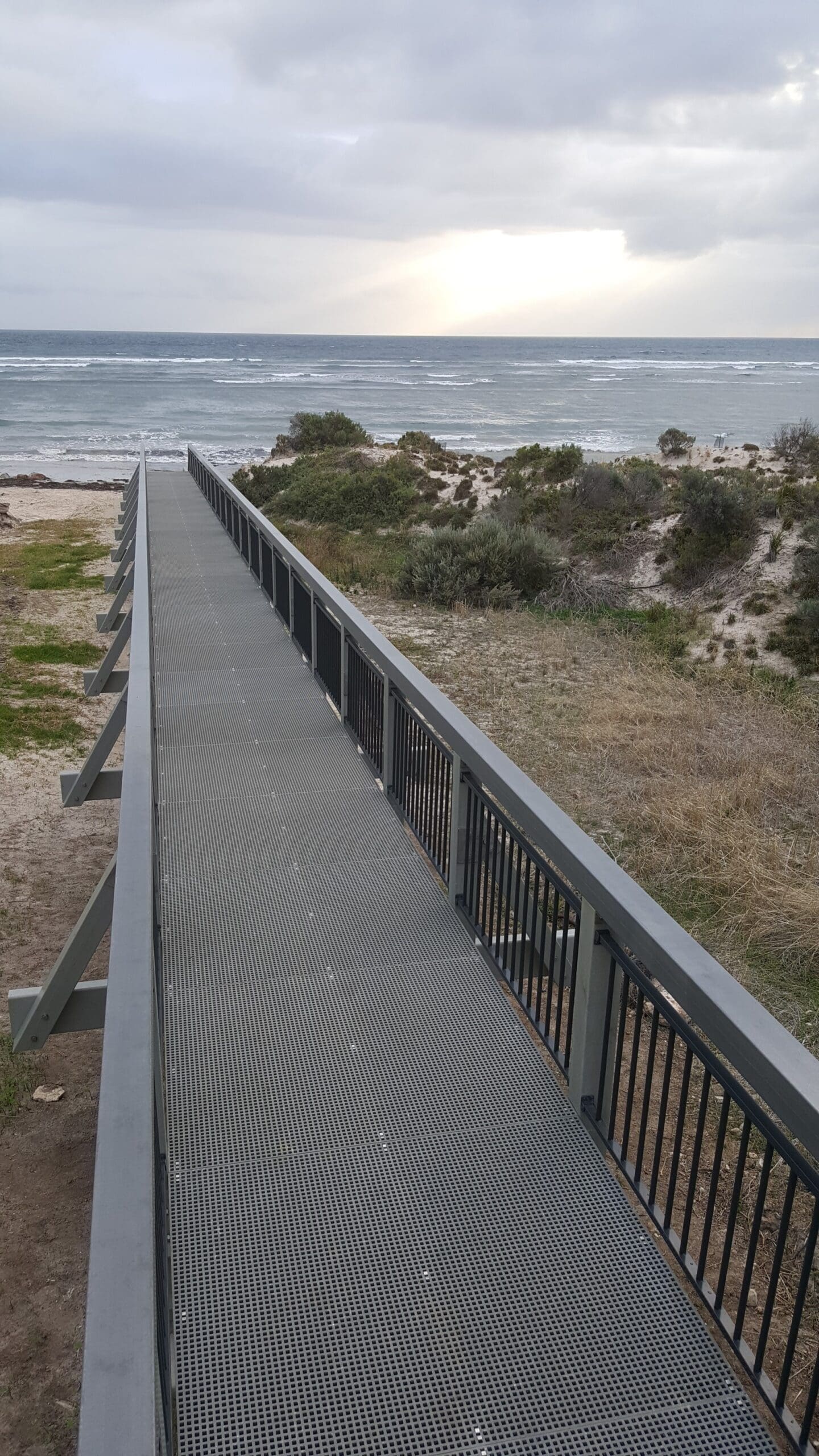
(Newly Installed Boardwalk by the Beach)
Snapper Point Boardwalk, Aldinga Beach – photo taken in 2016
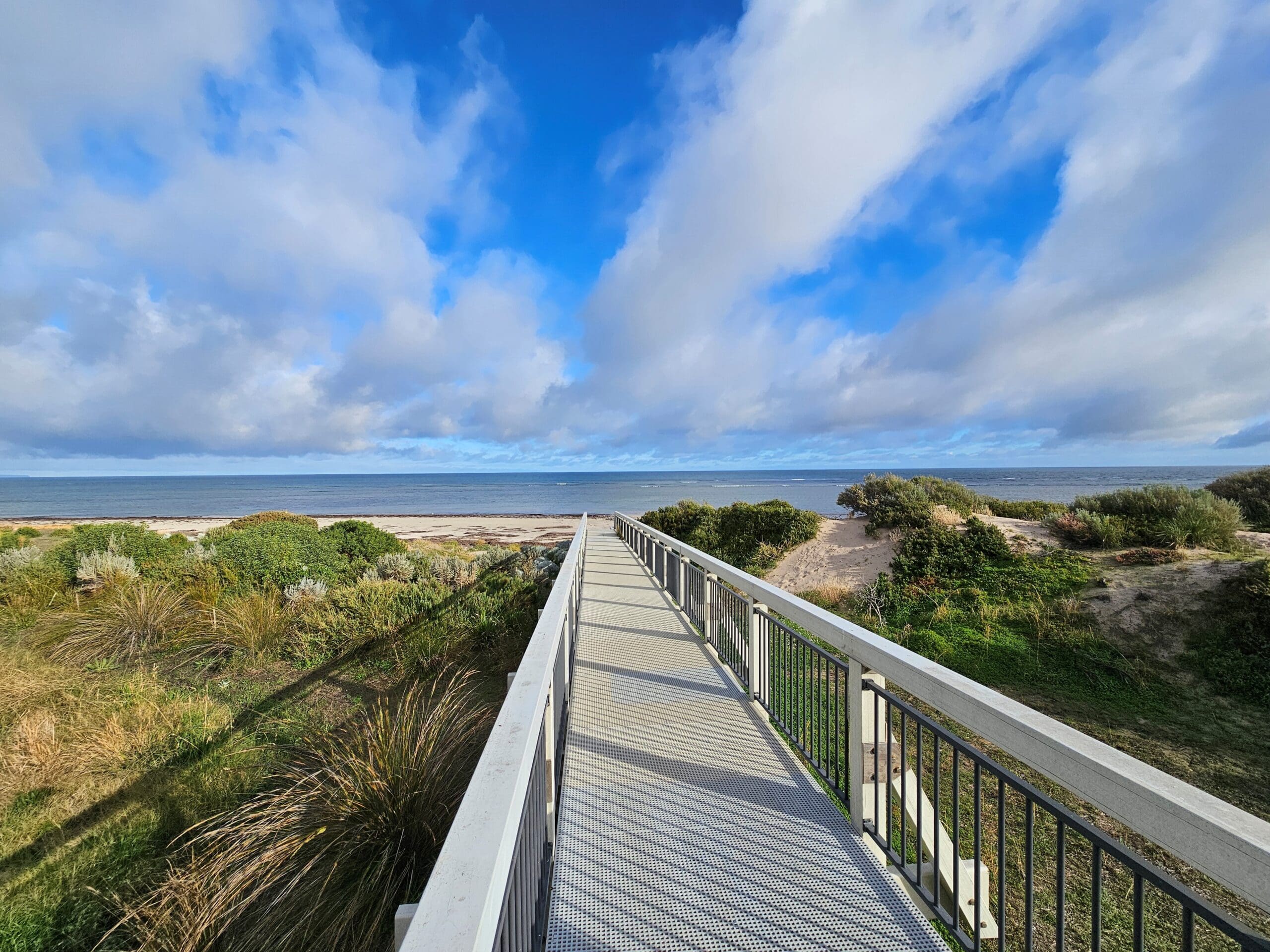
(Same Installed Boardwalk by the Beach)
Snapper Point Boardwalk, Aldinga Beach – Photo taken in 2024
FRP grating also eliminates the risk of delamination that can occur in some traditional composite walkway products, helping maintain structural integrity throughout the asset’s service life.
Supporting Fire Performance Requirements
In many public infrastructure applications, fire performance remains an important design consideration.
Treadwell’s FRP grating is manufactured with fire-retardant additives that help meet project-specific fire performance requirements, making it suitable for a range of recreational and public access environments where safety and compliance are critical.
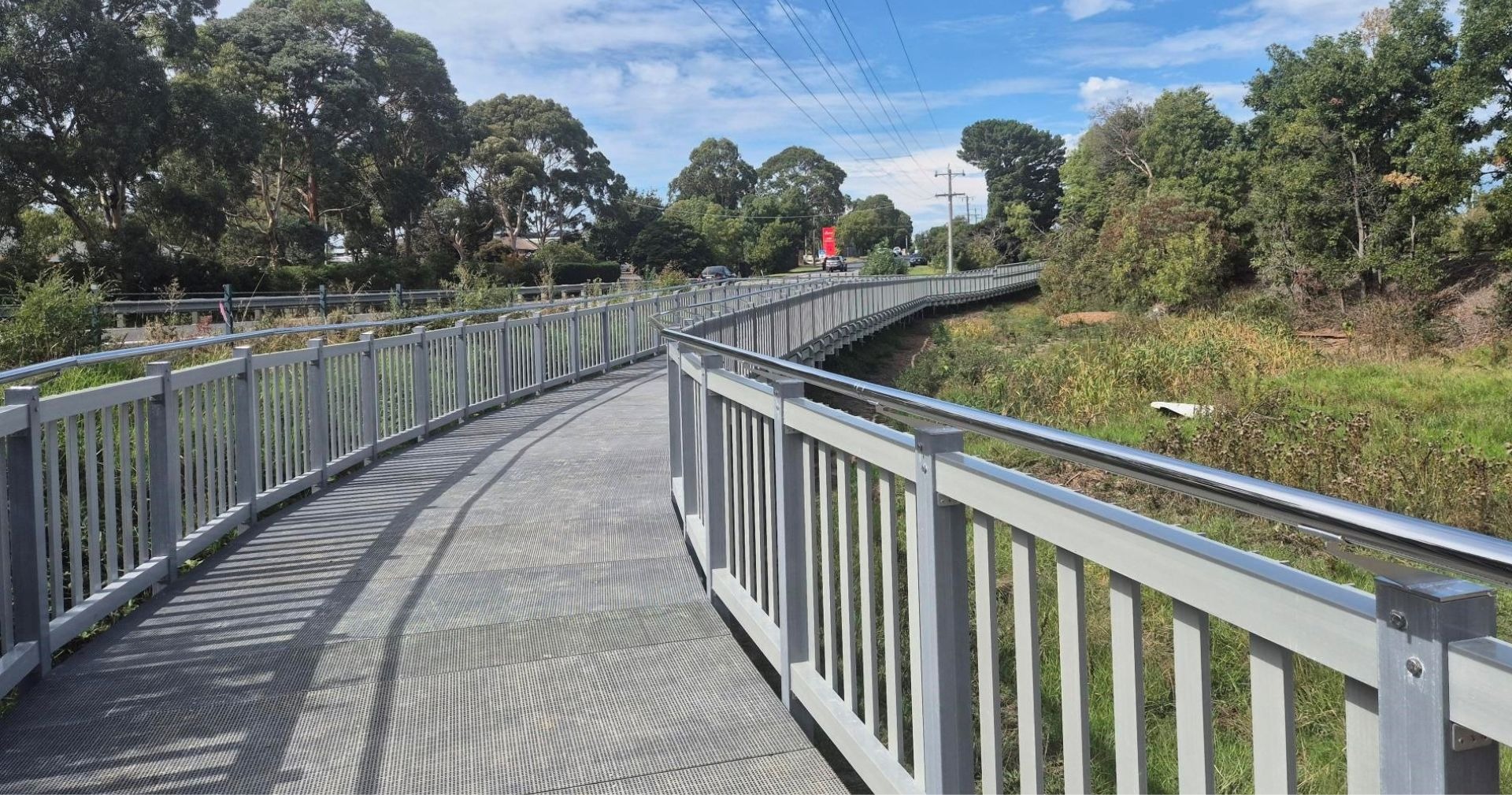
Public Boardwalk
Baxter-Sommerville Boardwalk, Victoria
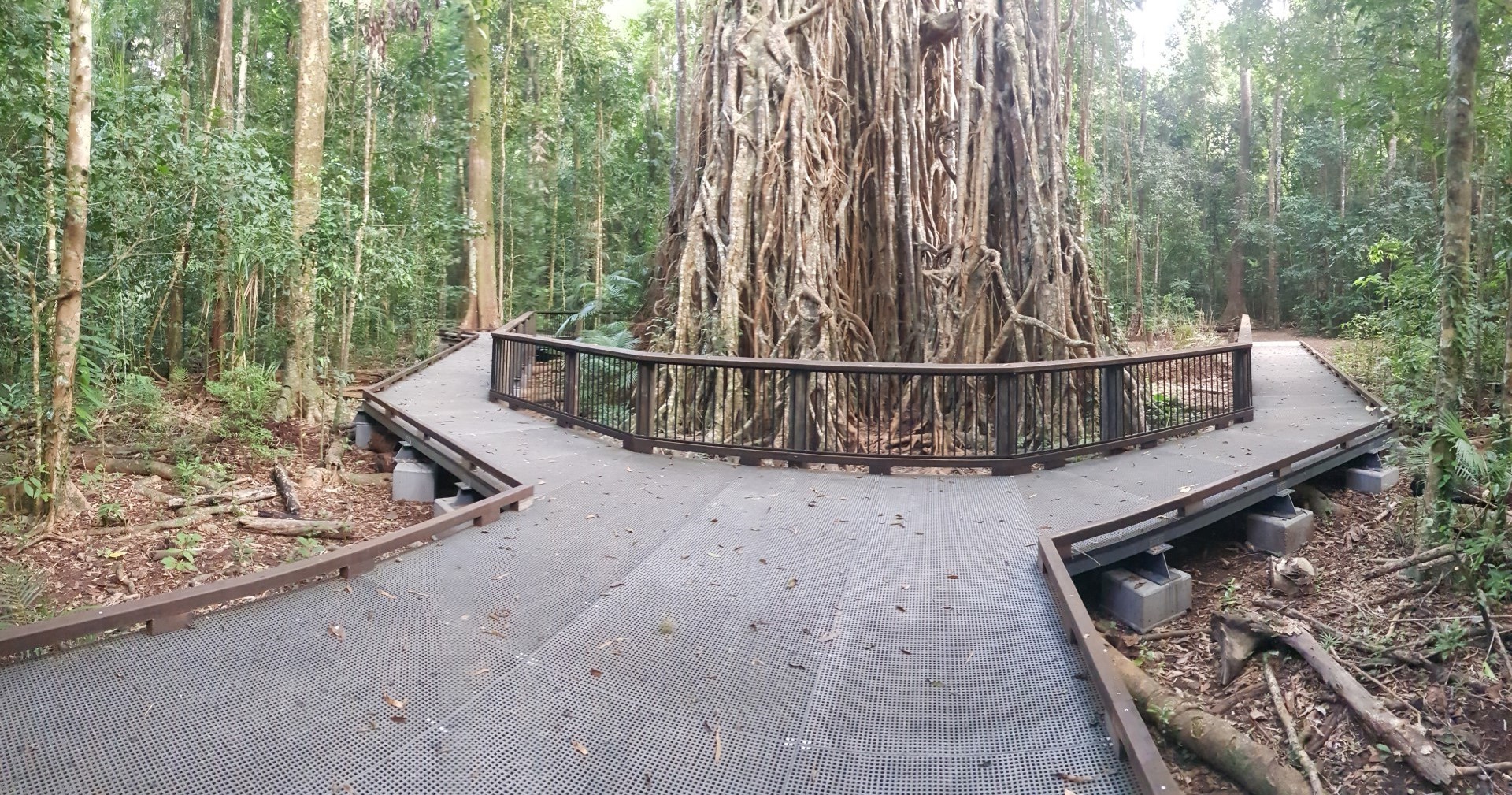
Recreational Boardwalk
Cathedral Fig Tree Boardwalk, Queensland
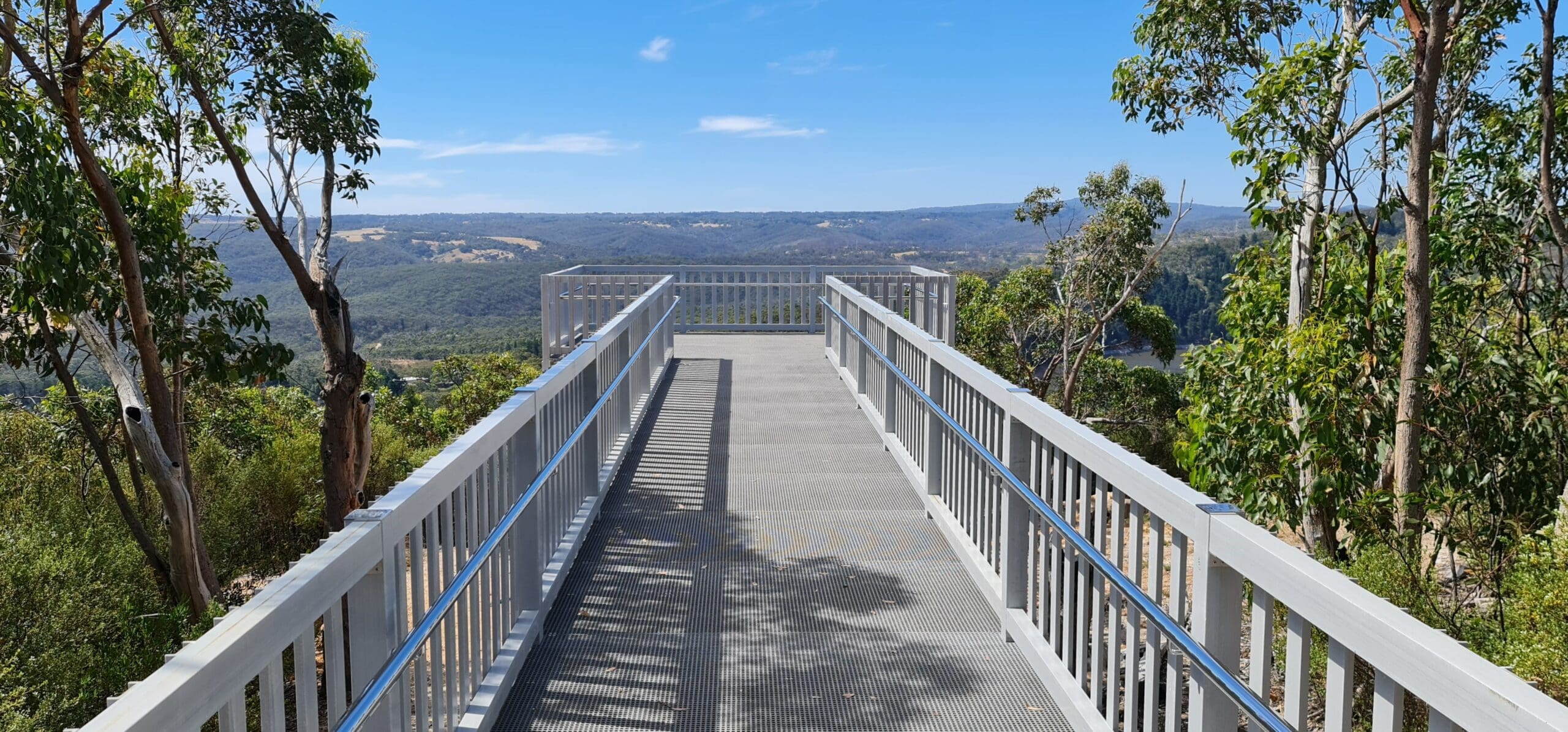
Boardwalk with Viewing Platform
Mount Bold, Western Australia
For asset owners taking a whole-of-life approach to infrastructure management, FRP grating offers a practical balance of safety, durability and maintenance efficiency. Its resistance to moisture, corrosion, organic build-up and delamination helps keep recreational walkways operational for longer, reducing repair interventions and supporting a better experience for the communities that use them.